You want clear rankings, not guesses, when choosing products that matter.
This best products ranked list shows the top wireless earbuds after direct comparison using consistent, practical criteria.
You’ll see which models perform best overall, which offer the strongest value, and which fit specific needs.
How These Earbuds Were Selected
These earbuds were selected according to consistent rules to ensure the ranking remains objective.
Each model had to meet the same baseline before it could be compared.
- Current models — Only recent releases that are still actively sold.
- Brand support — Ongoing firmware updates, app maintenance, and service options.
- Wide availability — Easy to find from major retailers, with no limited stock.
- Core features — Must include ANC, transparency mode, and a working companion app.
- Price coverage — Includes premium, midrange, and budget-friendly options.
- Reliability filter — Excludes models with repeated reports of defects or unstable performance.
- Use-case fit — Chosen to cover common needs like commuting, calls, and everyday listening.
Comparison Criteria Used for Ranking
These criteria were used to compare each earbud under the same conditions. Each point focuses on what changes your daily experience.
- Sound quality — Clarity, balance, and bass control.
- Noise canceling — How well ANC reduces steady noise and voices.
- Comfort and fit — Long-wear comfort and stable seal.
- Call quality — Voice clarity and background noise control.
- Battery and charging — Real use time, case support, and charge speed.
- Features and compatibility — Multipoint, controls, and iOS/Android performance.
- Price vs value — What you get for the money, not just the lowest price.
Ranking Method (How Scores Were Assigned)
Scores were assigned using a consistent system, so every product was judged the same way.
This method focuses on overall balance rather than a single standout feature.
- Weighted scoring — Core criteria like sound, ANC, and comfort carried more weight than extras.
- Standard testing conditions — All earbuds were evaluated in similar environments and use cases.
- Category averages — Scores were compared against the group, not isolated impressions.
- Tie resolution — Comfort and call reliability were used to break close scores.
- Value adjustment — Price was factored in after performance scoring, not before.
- Use-case priority — Rankings favor everyday use over niche or rare scenarios.
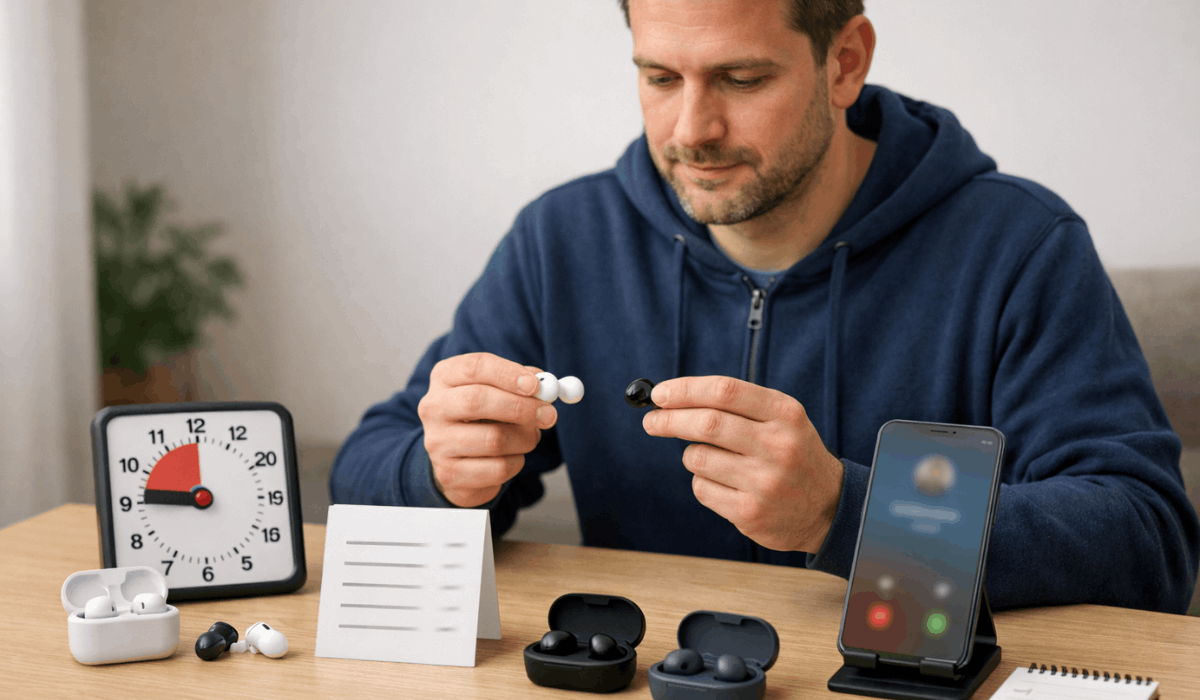
Best Wireless Earbuds Ranked After Comparison
These rankings reflect how each earbud performed across all comparison criteria.
Positions are based on overall balance, not hype or brand popularity.
Rank #1 – Sony WF-1000XM5 (Best Overall)
- Strong sound, effective ANC, and consistent performance across all use cases.
Rank #2 – Apple AirPods Pro (2nd Gen, USB-C) (Best for iPhone Users)
- Seamless Apple integration with reliable ANC and transparency.
Rank #3 – Bose QuietComfort Ultra Earbuds (Best Noise Canceling)
- Class-leading noise reduction focused on loud environments.
Rank #4 – Jabra Elite 10 (Best for Calls and Comfort)
- Clear call quality and a fit designed for long wear.
Rank #5 – Samsung Galaxy Buds2 Pro (Best for Samsung Users)
- Optimized features and performance within the Galaxy ecosystem.
Rank #6 – Sennheiser Momentum True Wireless (Best for Sound Detail)
- Tuned for listeners who prioritize audio clarity.
Rank #7 – Anker Soundcore Liberty 4 NC (Best Budget Value)
- Strong feature set and ANC at a lower price point.
Quick Comparison Summary (Fast Picks)
This summary helps you choose quickly based on your top priority. Each pick highlights the strongest reason to buy.
- Best overall balance — Sony WF-1000XM5 for sound, ANC, and features.
- Best for iPhone users — AirPods Pro (2nd Gen, USB-C) for seamless integration.
- Best noise canceling — Bose QuietComfort Ultra Earbuds for loud environments.
- Best for calls and comfort — Jabra Elite 10 for a clear voice and long wear.
- Best for Samsung users — Galaxy Buds2 Pro for ecosystem features.
- Best sound detail — Sennheiser Momentum True Wireless for audio focus.
- Best budget option — Anker Soundcore Liberty 4 NC for value and features.
Which One Should You Buy
Use this guide to match your top priority with the right earbuds. Choose the option that fits daily use and device setup.
- Best overall balance — Sony WF-1000XM5
- Best for iPhone — Apple AirPods Pro (2nd Gen, USB-C)
- Strongest noise canceling — Bose QuietComfort Ultra Earbuds
- Best for calls and comfort — Jabra Elite 10
- Best for Samsung/Android features — Samsung Galaxy Buds2 Pro
- Best for detailed sound — Sennheiser Momentum True Wireless
- Best budget value — Anker Soundcore Liberty 4 NC
Common Deal-Breakers You Should Check First
These factors can make or break daily satisfaction, even with highly ranked products.
Checking them early helps avoid regret after purchase.
- Fit and ear shape — Some earbuds seal better than others, and a poor fit affects comfort and ANC.
- Control layout — Touch controls can be sensitive or limited depending on the model.
- App stability — Weak apps lead to connection issues and unreliable updates.
- Device compatibility — Certain features work only within specific ecosystems.
- Return policy — Comfort and fit can’t be guaranteed without a trial period.
What the Specs Don’t Tell You
Specs explain features, but they don’t show how earbuds behave in daily use.
These points often matter more than numbers on a box.
- ANC comfort tradeoffs — Strong noise canceling can create pressure or fatigue for some users.
- Mic performance varies — Call quality changes based on background noise and wind.
- Fit affects sound — Poor seal reduces bass and weakens ANC, even on high-end models.
- Battery ages unevenly — Real battery life drops over time, not equally across brands.
- Controls in motion — Touch controls may misfire during workouts or cold weather.
Best Alternatives If Your Top Pick Is Out of Stock
Even top-ranked earbuds can sell out or change price quickly. These alternatives keep performance and features close to the original picks.
- Alternative to Sony WF-1000XM5 — Bose QuietComfort Ultra Earbuds for similar ANC and balanced sound.
- Alternative to AirPods Pro (2nd Gen, USB-C) — Samsung Galaxy Buds2 Pro for strong ecosystem perks.
- Alternative to Bose QuietComfort Ultra Earbuds — Sony WF-1000XM5 for nearly as good ANC and better battery life.
- Alternative to Jabra Elite 10 — Sennheiser Momentum True Wireless for solid comfort and reliable calls.
- Alternative to Samsung Galaxy Buds2 Pro — Anker Soundcore Liberty 4 NC for good value with key features.
Maintenance Tips That Preserve Performance
Basic care helps earbuds keep sound quality and battery life over time. These simple habits reduce wear and prevent common issues.
- Clean ear tips regularly — Remove buildup that affects fit, sound, and ANC.
- Wipe charging contacts — Dirt on contacts can cause charging problems.
- Store in the case — Prevents damage and keeps batteries at proper levels.
- Avoid extreme heat — High temperatures shorten battery lifespan.
- Update firmware — Fixes bugs and improves stability and performance.
Final Section: Your Next Step
Clear rankings make it easier to choose the right earbuds without guessing.
This best products ranked guide helps narrow options based on real performance and everyday use.
Review your priorities, choose the model that best fits them, and make your purchase with confidence.