Somewhere between your third dead phone and your fourth cheap pan flaking into scrambled eggs, a thought hits: maybe the problem is what I keep buying.
Ranking daily task products by how often they get used changes the entire conversation. Frequency, not flashiness, decides what earns permanent counter or desk space.
This list sorts seven product categories by one filter: does it remove friction from something you repeat every single day? If the answer is no, it dropped off.
I built this ranking for the budget-aware apartment dweller who is tired of replacing the same gear every eight months and wants fewer purchases that last longer.
How This Ranking Scores Daily Task Products
Every “best products” list online sorts by star ratings or price brackets. That approach misses the thing that matters after the package arrives: how many days per week do you reach for it? A product used six days a week at $60 beats a product used once a week at $25 over any 12-month window.
Cost Per Use Beats Sticker Price Every Time
Cost per use is the single number that separates smart buys from impulse purchases. Take a $45 nonstick skillet used 350 times a year. That is roughly $0.13 per use. Compare it to a $30 pan that warps after four months and needs replacing.
The cheap pan costs nearly $0.25 per use across the same year.
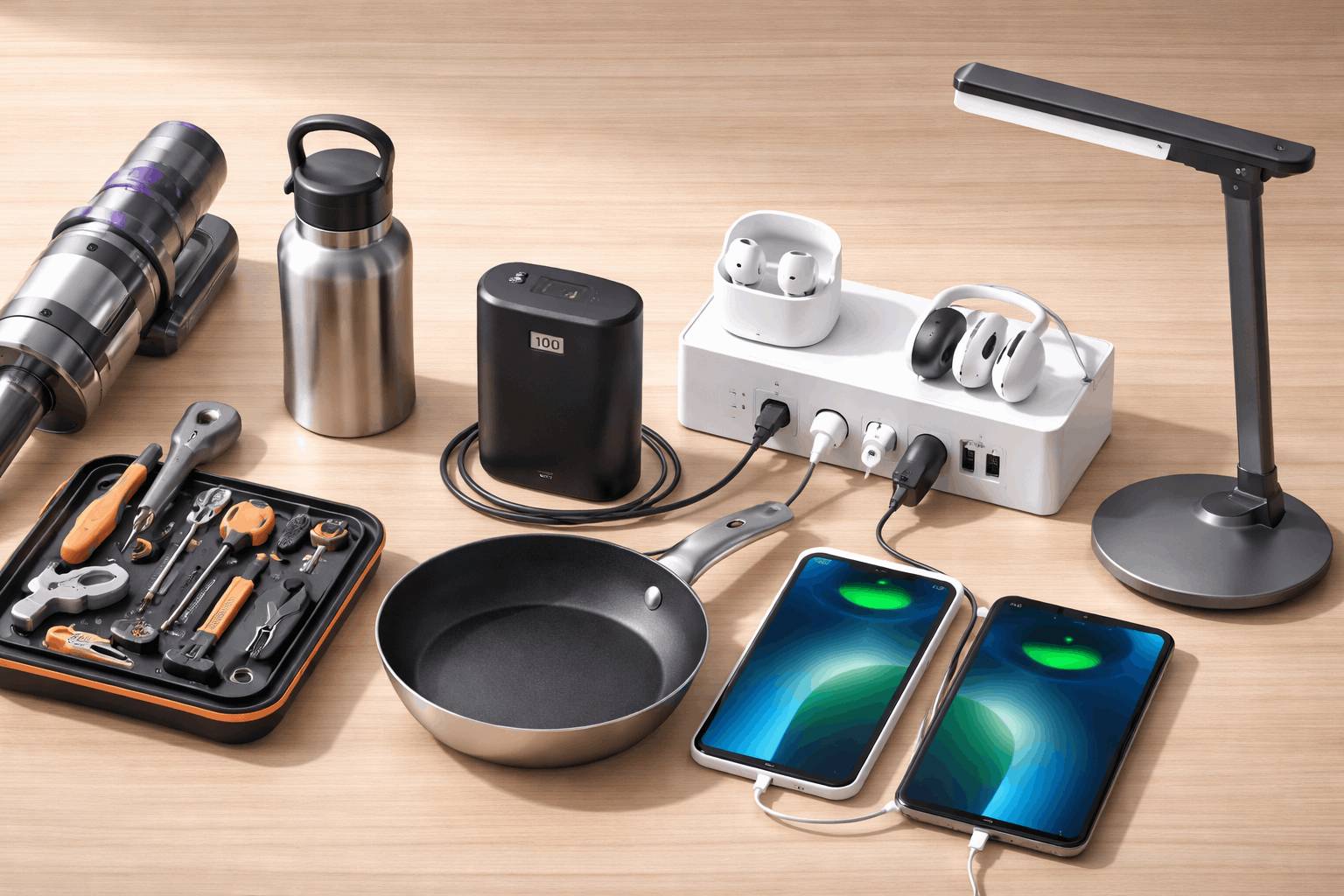
This math applies to every category on this list. A USB-C charger running daily for three years costs fractions of a cent per charge. A power bank used four times a week during a school semester pays for itself before midterms.
The raw ranking below weighs three factors for each product type:
- Frequency of daily use: how many days per week the average household reaches for it
- Replacement cycle length: how long the product stays functional before needing a replacement
- Friction removed per use: how much time or hassle each use saves compared to the alternative
- Safety and certification: whether the product category carries real risk when bought cheap (chargers and power banks do)
That last point matters more than people realize. A charger without over-current protection or proper heat management is a fire risk sitting on your nightstand.
Also Read: Comparison Guide Without Marketing Hype
The Top 3 Daily Task Products Worth Buying First
These three categories ranked highest because they solve problems that recur literally every day. Not weekly. Not seasonally. Daily.
USB-C Multi-Port Fast Charger
A multi-port USB-C fast charger sits at the top because modern life runs on battery percentages. Phones, tablets, laptops, earbuds, and portable lights all pull from the same outlet. A single multi-port charger eliminates the cable tangle and the “who stole my charger” argument.
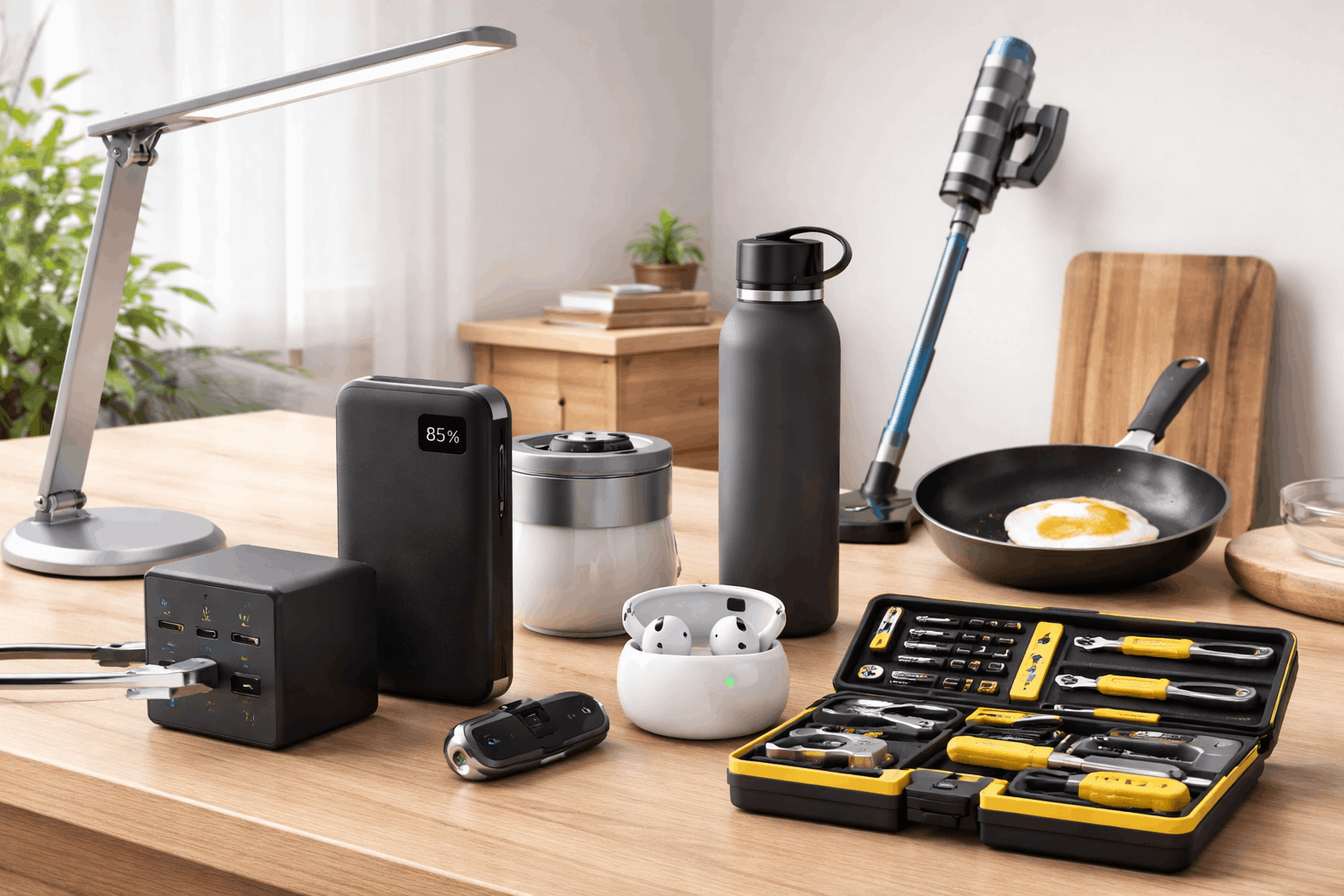
The specs that matter are total wattage and how power distributes when multiple devices charge at once. A 100W charger split across four ports does not give each device 25W. Some ports get priority. Check the spec sheet for simultaneous output ratings, not just peak single-port numbers.
I think the USB-C charger category deserves the #1 spot over power banks because a dead wall charger stops your entire household, while a dead power bank only affects one person outside the house.
Cables matter here too. A $40 charger paired with a $2 gas station cable loses its safety certifications at the weakest link. Budget $8 to $12 per cable from brands that publish their testing data on USB-IF’s certified product list.
High-Capacity USB-C Power Bank
The power bank sits at #2 because it extends your charger’s reach outside the home. Students, commuters, and gig workers burn through phone battery on navigation, mobile payments, and messaging before 3 PM.
Target a capacity that covers at least one full phone recharge plus a partial second charge. For most phones in 2026, that means a 10,000mAh to 20,000mAh bank. Get one with USB-C input and output so a single cable charges both the bank and your devices.
Safety is a real concern in this category. Batteries that lack proper certification testing can swell, overheat, or fail during air travel. Stick with banks from manufacturers that disclose their cell supplier and testing lab.
Do Noise-Canceling Earbuds Belong at #3?
The raw ranking placed noise-canceling wireless earbuds at third. I would swap this spot with the nonstick skillet. Earbuds are a convenience product.
Cooking is an unavoidable daily task. The skillet removes friction from something you cannot skip. Earbuds remove friction from something you could solve with a closed door or a $12 pair of foam earplugs.
That said, if your daily routine involves public transit, shared workspaces, or frequent calls, earbuds do earn a high rank. Prioritize a stable Bluetooth connection and a microphone that isolates your voice. Battery life should cover your longest typical day without needing a mid-day case charge.
The fit system matters more than the brand name. Multiple tip sizes reduce ear fatigue and improve noise isolation. A $70 pair that fits your ears well will outperform a $250 pair that keeps slipping.
Home Products That Handle the Tasks Nobody Wants to Do
Charging and audio are personal tech. The next two categories solve household friction: cleaning and cooking. These are the tasks people delay, skip, or dread. The right product turns a 30-minute chore into a 5-minute habit.
Cordless Stick Vacuum for Quick Cleanups
A cordless stick vacuum changes cleaning behavior. When a vacuum is light enough to grab one-handed and stored where you can reach it in seconds, quick cleanups happen daily instead of weekly.
The three specs to compare before buying:
| Feature | Budget Option ($80-$120) | Mid-Range Option ($150-$250) | Premium Option ($300+) |
|---|---|---|---|
| Battery runtime | 15-20 minutes | 25-40 minutes | 40-60+ minutes |
| Suction on carpet | Weak after 6 months | Consistent for 1-2 years | Consistent for 2-3+ years |
| Filter maintenance | Non-washable, replace often | Washable, replace yearly | Washable, self-cleaning alerts |
| Dust bin capacity | Small, frequent emptying | Medium, empties cleanly | Large, one-button empty |
The mid-range tier tends to offer the best cost-per-use ratio for a household that vacuums 4 to 5 times per week.
Homes with pets or kids near entrances get the fastest payback from this product. Check that replacement filters and brush rolls are available for your model before buying. Some brands discontinue parts within two years of release, which kills an otherwise solid vacuum.
Nonstick Skillet for Everyday Cooking
A nonstick skillet handles eggs, vegetables, quick stir-fries, and reheated leftovers without the scrubbing. Heat distribution and coating durability separate a pan that lasts three years from one that peels in four months.
Size selection trips up a lot of buyers. Pick the size that matches your regular weeknight portion, not the pan big enough for Thanksgiving. A 10-inch skillet covers one to two people. A 12-inch fits a family of four.
Two rules extend nonstick life dramatically:
- Never preheat an empty nonstick pan on high heat. The coating degrades fastest when heated without food or oil.
- Use silicone, wood, or plastic utensils only. A single scrape from a metal spatula can start the flaking cycle.
- Hand-wash instead of dishwasher cycles. The detergent and heat combination wears coatings faster than sponge and soap.
The handle needs to feel stable in one hand when the pan holds food. A loose or wobbly handle at the store means a dangerous handle six months later. Confirm the pan works with your stove type before checkout. Induction stoves require a magnetic base layer that not every nonstick pan includes.
Two Products People Ignore Until the Inconvenience Stacks Up
The bottom two categories on this list do not solve dramatic problems. They solve small annoyances that compound over weeks. A forgotten water bottle means a $3 daily purchase at the campus vending machine. Bad desk lighting means headaches after two hours of screen work.
Insulated Leakproof Bottle or Tumbler
An insulated bottle keeps drinks at temperature for hours and eliminates the daily cost of single-use bottles or coffee shop cups. The leak test matters more than the brand logo. Pack it in a bag with a laptop once and a faulty seal becomes an expensive problem.
Choose a lid style that fits your routine: straw lids for driving, wide-mouth for ice and smoothies, sip lids for desk use. Confirm replaceable gaskets and seals are sold separately. A $35 bottle with a $4 replacement gasket available online lasts years.
A $35 bottle with proprietary parts that go out of stock becomes landfill. Hydro Flask’s replacement parts page is a good example of what accessible part availability looks like.
LED Desk Lamp With Adjustable Brightness
An adjustable LED desk lamp reduces eye strain during homework, reading, screen work, and late-night packing.
The two settings that matter are brightness range and color temperature control. A lamp that shifts from cool white (focused work) to warm white (evening relaxation) adapts to the full day without a second light source.
A stable base and simple controls keep the lamp in daily rotation. Complicated touch panels or app-connected setups discourage regular use. A physical dial or two-button system works better for something you adjust multiple times a day.
Some models include a built-in USB port, which pairs well with the charger setup from the top of this list. That is a nice-to-have, not a reason to overpay.
Picking Your Personal Top Three From This List
Buying all seven categories at once defeats the purpose. Start with the category that fixes the interruption you hit most often: dead battery, dirty floor, or a kitchen dreading dinner.
Add a second item that supports your main productivity block. Students might pair a charger with a desk lamp. Remote workers might pair earbuds with a vacuum for midday resets.
The third pick should be a “risk reducer” that prevents avoidable problems. Power banks prevent dead phones during commutes. A good bottle prevents dehydration headaches during long study sessions.
Use each product daily for at least a month before adding another category. One month of consistent use reveals whether the product is a permanent fixture or a shelf ornament.
Questions People Ask About Best Products for Daily Tasks
Q: How do I know if a daily product is worth upgrading? Track how often you reach for it in a normal week. If the number is five or higher and the current version frustrates you (slow, broken, hard to clean), an upgrade will pay for itself quickly. Anything under three uses per week is a want, not a need.
Q: Are expensive brands always better for daily-use products? Not always. Brand premium often pays for packaging and marketing rather than better internals. Compare the specific specs (wattage, battery capacity, material type) side by side. A lesser-known brand with identical specs and proper safety certification can perform the same at 40% less cost.
Q: Should I buy daily task products in bundles or separately? Separately, almost every time. Bundles pair one item you need with two items you do not. Retailers use bundles to move slow inventory. Pick each category based on its own merit and buy from whichever brand wins that specific comparison.
Q: How long should a daily-use product last before replacing it? A good benchmark is 18 months of daily use without performance decline. Chargers and power banks should hold output consistency for two to three years. Nonstick pans typically last two to three years with proper care. Vacuums should maintain suction for at least two years if filters are cleaned on schedule.
Q: What is the single best first purchase for a new apartment? A multi-port USB-C fast charger. Everything else in the apartment runs on battery power, and a dead phone at 2 PM cascades into missed messages, lost navigation, and failed mobile payments. Solve the power problem first. Everything else can wait a paycheck.
Conclusion
The best daily task products are the ones that disappear into your routine and stop requiring thought. Spending more time choosing and less time replacing saves both money and frustration over a full year.
Start with two categories, use them hard, and let the results decide what comes next. The list above gives you a starting order, but your daily friction points write the final ranking.