Two phones that look almost identical sit on a store shelf, and one costs $100 more. If you own a Galaxy S25 or plan to buy your first Samsung flagship, that price gap deserves a closer look.
The Samsung Galaxy S26 launched on March 11, 2026, at $899 for the base 256GB model. The Galaxy S25 started at $799 for 128GB just a year earlier.
Spec sheets make the S26 look like the obvious winner. But once you break down the real-world differences, the answer gets a lot less obvious.
Every Galaxy S26 vs S25 comparison should start with what Samsung quietly changed behind the scenes, not just what got bigger or faster.
Samsung Galaxy S26 vs S25 Specs Side by Side
Samsung kept the same three-tier lineup for 2026: the base S26, S26+, and S26 Ultra. The design between the S26 and S25 base models is so close that casual observers can’t tell them apart.
But the spec sheet tells a different story, and some of the differences are easy to overlook if you’re just reading marketing copy.
| Feature | Galaxy S25 | Galaxy S26 |
|---|---|---|
| Starting Price | $799 (128GB) | $899 (256GB) |
| Display Size | 6.2 inches | 6.3 inches |
| Chipset | Snapdragon 8 Elite | Snapdragon 8 Elite Gen 5 |
| Battery | 4,000 mAh | 4,300 mAh |
| Video Playback | Up to 28 hours | Up to 30 hours |
| Peak Brightness | 2,600 nits | 2,600 nits |
| Base Storage | 128GB | 256GB |
| OS at Launch | Android 15 / One UI 7 | Android 16 / One UI 8.5 |
The S26 wins on paper in battery, storage, and chipset. But notice what stayed the same: peak brightness, refresh rate, resolution, and charging speed on the base model.
The $100 Price Bump Samsung Hopes Nobody Questions
The pricing story is the one detail that gets buried in most comparisons. Samsung didn’t just raise the price by $100. The company also killed the 128GB option entirely on the S26 lineup.
Is the Galaxy S26 More Expensive or Better Value?
At first glance, $899 for 256GB seems fair when the Galaxy S25 charged $859.99 for the same storage tier. That’s only a $40 increase for the same capacity. But Samsung removed your ability to spend $799 on a phone you might have been perfectly happy with.
I think Samsung’s decision to drop the 128GB Galaxy S26 is a calculated upsell, not a consumer-friendly move. A 128GB phone in 2026 still works for someone who streams music, doesn’t shoot 4K video daily, and uses cloud storage.
Samsung didn’t remove it because the storage was insufficient. The company removed it because $899 entry points are more profitable.
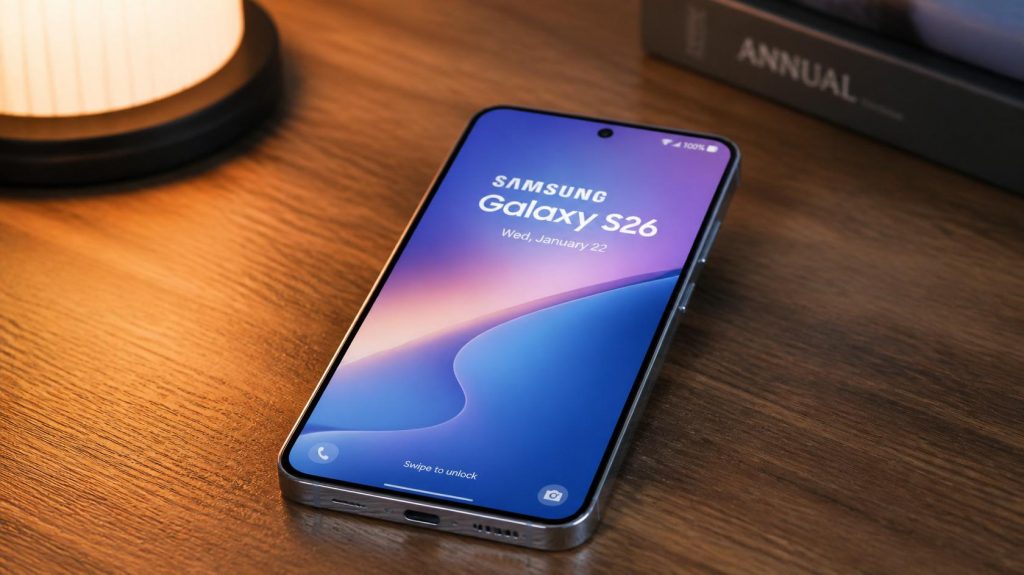
For buyers comparing the 256GB Galaxy S25 at $859 against the 256GB Galaxy S26 at $899, the real delta is $40. That’s a much smaller pill to swallow. But if you were a 128GB buyer? Samsung just priced you out of the base model.
The Hidden Cost: Case Incompatibility
The S26 is 0.1 inches taller and slightly wider than the S25. The camera bump changed shape too. If you already own Galaxy S25 cases, none of them fit the S26. That’s another $20 to $50 on top of the phone price, and no comparison article seems to mention this.
Display and Design Differences Between Galaxy S26 and S25
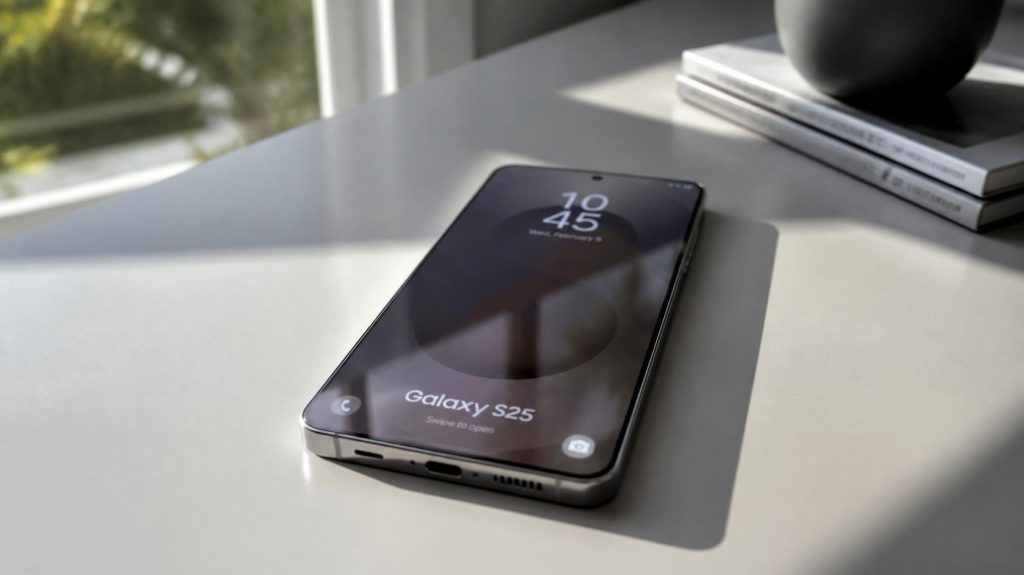
Samsung swapped the S25’s sharper edges for softer, more rounded curves on the S26. The company says this reduces hand fatigue during long sessions. Both phones use Gorilla Glass Victus 2 on front and back, and both have an aluminum frame.
Does 0.1 Inches of Screen Really Matter?
The S26’s 6.3-inch display is marginally larger than the S25’s 6.2-inch screen. Both panels are Dynamic AMOLED 2X with 120Hz adaptive refresh and 2,600 nits peak brightness. Same resolution. Same HDR support.
On paper, this is a tie. Can you feel 0.1 inches? Probably not. The thinner bezels on the S26 make the screen look slightly more immersive, but this difference is cosmetic.
If display quality is your priority, both phones deliver the same experience where it counts: color accuracy, outdoor visibility, and scrolling smoothness.
Galaxy S26 Ultra’s Privacy Display Changes the Game
The S26 Ultra introduces a Privacy Display that darkens the screen for anyone viewing it from an angle. This feature is exclusive to the Ultra model and doesn’t exist on the base S26 or S26+. If you need screen privacy, the base S26 won’t help you, and the Ultra starts at $1,299.
Performance: Snapdragon 8 Elite Gen 5 vs Snapdragon 8 Elite
The Galaxy S26 runs the newer Snapdragon 8 Elite Gen 5 chipset. The S25 uses the original Snapdragon 8 Elite. Both chips are fast enough for any task a normal person throws at a phone in 2026.
Where the Gen 5 chip pulls ahead is sustained performance under load and AI processing speed. Tasks like photo object removal, text summarization, and live translation complete faster on the S26 because of improved NPU efficiency.
The S26 also runs cooler during extended gaming sessions, which matters if you use your phone for more than scrolling.
Here’s the catch, though. The S25’s Snapdragon 8 Elite is not slow. The performance gap between these two chips is measurable in benchmarks but barely noticeable in daily use unless you’re running AI features constantly.
Things to check before deciding based on performance alone:
- Gaming frequency: Heavy mobile gamers will feel the thermal improvement on the S26
- AI feature usage: If you use Galaxy AI tools like generative photo editing multiple times a day, the S26’s NPU is noticeably faster
- Multitasking habits: Both phones handle split-screen and app switching without lag
- Long-term speed: The newer chip should age better over Samsung’s 7-year update window
Also Read: Product Comparison for Practical Buyers
Battery Life and Charging: Galaxy S26 vs S25
The S26 packs a 4,300 mAh battery compared to the S25’s 4,000 mAh. Samsung rates the S26 for up to 30 hours of video playback versus 28 hours on the S25. That’s a 2-hour improvement on paper.
Real-World Battery Gains
A 300 mAh increase combined with a more power-efficient chipset should translate to roughly 30 to 45 extra minutes of screen-on time per day for most users. The efficiency gains come from the chip, not just the larger battery.
Charging speeds are identical on the base models. Both the S26 and S25 support the same wired and wireless charging rates. The S26 Ultra gets Super Fast Charging 3.0, reaching about 75% in 30 minutes. But the base S26? Same charging speed as last year.
If charging speed is important to you, the base Galaxy S26 offers zero improvement over the S25.
Camera Hardware Stays Flat on the Base Models
Both the Galaxy S26 and S25 share identical rear camera hardware: a 50MP main sensor, 3x telephoto, and ultrawide lens. Samsung added software features like Horizon Lock for more stable video on the S26, but the lenses and sensors are unchanged.
The S26 Ultra is where camera upgrades live. A 200MP main sensor, wider apertures for low-light shooting, and improved AI ISP processing for selfies all landed on the Ultra. The base S26 didn’t get any of that.
For a buyer focused on camera quality, the differences between the S26 and S25 base models come down to software processing. Hardware is the same.
Software: One UI 8.5 vs One UI 7
The S26 ships with Android 16 and One UI 8.5, which brings a new feature called Now Nudge. This tool reads what’s happening on your screen and suggests relevant actions.
Someone texts about dinner plans, and the phone prompts you to open your calendar. Samsung’s Galaxy S26 comparison page lists all the One UI 8.5 features in detail.
The S25 launched with Android 15 and One UI 7 but will receive Android 16 through updates. Both phones get 7 years of OS and security updates from Samsung, so software longevity is equal.
The software difference at launch matters most in the first few months. After the S25 gets its Android 16 update, the gap shrinks. Features like Now Nudge may or may not arrive on the S25 through a One UI update.
Who Should Buy the Galaxy S25 Instead
I think the Galaxy S25 is the smarter buy for most people in 2026, especially at its current discounted prices on Amazon. The S25 at $700 to $750 gives you 90% of the S26 experience for $150 less than the S26’s launch price.
These buyers should grab the S25 instead of the S26:
- Anyone upgrading from a Galaxy S23 or older who doesn’t need the absolute latest chip
- Buyers comfortable with 128GB storage who don’t want to pay for capacity they won’t use
- People who want a flagship Samsung experience without crossing the $900 threshold
- Users who already own S25 accessories and cases
The S26 makes the most sense for someone buying their first Samsung phone with no prior accessories, or anyone moving up from a phone three or more generations old.
Questions People Ask About Samsung Galaxy S26 vs S25
Q: Can I use my Galaxy S25 case on the Galaxy S26? No. The S26 is slightly taller, wider, and has a redesigned camera bump. Even though the two phones look nearly identical, S25 cases won’t fit the S26 properly.
Q: Is the Galaxy S26 camera better than the S25? On the base models, the camera hardware is the same: 50MP main, telephoto, and ultrawide. The S26 adds software improvements like Horizon Lock for video, but photo quality from the sensors is comparable.
Q: How much longer does the Galaxy S26 battery last compared to the S25? Samsung rates the S26 at 30 hours of video playback versus 28 hours on the S25. Real-world screen-on time improvement is closer to 30 to 45 minutes per day, thanks to the efficient Gen 5 chip.
Q: Will the Galaxy S25 still get software updates in 2026? Samsung promises 7 years of OS and security updates for the S25, so it will receive Android updates through at least 2032. The S25 should get Android 16 and many of the same features the S26 ships with.
Q: Is the $100 price increase on the Galaxy S26 worth it? The real price increase over equivalent storage is $40 (256GB to 256GB). But Samsung removed the $799 128GB option entirely, so budget buyers no longer have a cheaper entry point into the S-series flagship.
Conclusion
The Galaxy S26 and S25 are closer than Samsung’s marketing wants you to believe. Choosing between them depends on your budget, your current phone, and how much $100 matters to you.
Samsung’s 7-year update commitment means the S25 won’t feel outdated anytime soon. And sometimes the smartest phone upgrade is the one you skip entirely.