Picking between the iPhone 15 and Google Pixel 8 gets easier once you stop reading spec sheets and start asking one question: what annoys you about your current phone?
Both launched in late 2023 at prices under $800. Now that they’ve been in pockets for over two years, the comparison shifts to something more interesting than launch-day benchmarks.
The iPhone 15 vs Google Pixel 8 debate looks different in 2026. Real-world wear, software updates, and battery aging tell a story that first-week reviews never could.
So if you’re shopping the mid-range sweet spot right now, this breakdown focuses on what matters after the honeymoon period fades.
iPhone 15 vs Pixel 8 Price After Two Years on the Market
Pricing tells a different story now than it did at launch, and that story favors one phone more than you’d expect.
The iPhone 15 launched at $799 and the Pixel 8 at $699, putting Google $100 ahead on day one. But phone prices rarely stay fixed. Carrier deals, trade-in programs, and seasonal discounts have pushed both phones well below their original MSRPs throughout 2025 and into 2026.
Resale Value and Total Cost of Ownership
The real cost gap shows up at resale time. iPhones have historically held higher prices on the secondary market, and the iPhone 15 follows that trend. A two-year-old iPhone 15 in good condition still pulls more on resale platforms than a Pixel 8 of the same age.
That $100 upfront savings on the Pixel 8 can shrink or disappear once you factor in trade-in value when upgrading. Total cost of ownership also includes accessories and repair costs, where Apple’s larger accessory market gives buyers more options at competing price points.
For someone planning to keep the phone three years or longer, the Pixel 8’s lower entry price and seven-year update commitment make the math more interesting. But quick upgraders who sell every 18-24 months may find the iPhone 15 costs roughly the same or less per month of use.
Which Deals to Watch
Google runs aggressive promotions through the Google Store during seasonal sales, sometimes bundling the Pixel 8 with free accessories or steep discounts. Apple’s deals tend to come through carriers rather than direct price cuts. Checking both channels before buying can save $50-150 depending on timing.
iPhone 15 vs Pixel 8 Display: Does 120Hz Still Matter?
The display difference between these two phones is the single most debated spec in this comparison. And I think the consensus gets it wrong.
Pixel 8’s 120Hz OLED Screen
The Pixel 8 has a 6.2-inch OLED panel running at 120Hz, which means the screen refreshes twice as fast as the iPhone 15’s 60Hz display. Scrolling feels buttery. Animations look fluid. Gaming responds to touch with less perceived lag.
Anyone coming from a 120Hz phone will notice the difference immediately. The Pixel 8’s display makes everyday actions like flipping through social feeds and reading long articles feel smoother.
iPhone 15’s 60Hz Brightness Advantage
The iPhone 15 runs a 6.1-inch Super Retina XDR OLED capped at 60Hz but reaches up to 2000 nits of peak outdoor brightness.
That brightness gap matters more than refresh rate in one specific scenario: using your phone outside on a sunny day. Maps, messages, and photos stay readable when the Pixel’s screen starts struggling against direct sunlight.
I think the 60Hz limitation on iPhone 15 matters less than reviewers claim, because the 2000-nit brightness advantage shows up daily for anyone who spends time outdoors. After about a week with a 60Hz screen, the brain adjusts.
But squinting at a dim display in sunlight never stops being annoying. Brightness compounds over every outdoor interaction. Refresh rate fades into background noise.
That said, if gaming or heavy scrolling fills your screen time, the 120Hz panel on the Pixel 8 is a real quality-of-life upgrade that no amount of brightness compensates for.
Also Read: iPad Air vs Samsung Galaxy Tab S9: Product Comparison Explained Clearly
iPhone 15 vs Pixel 8 Camera Comparison
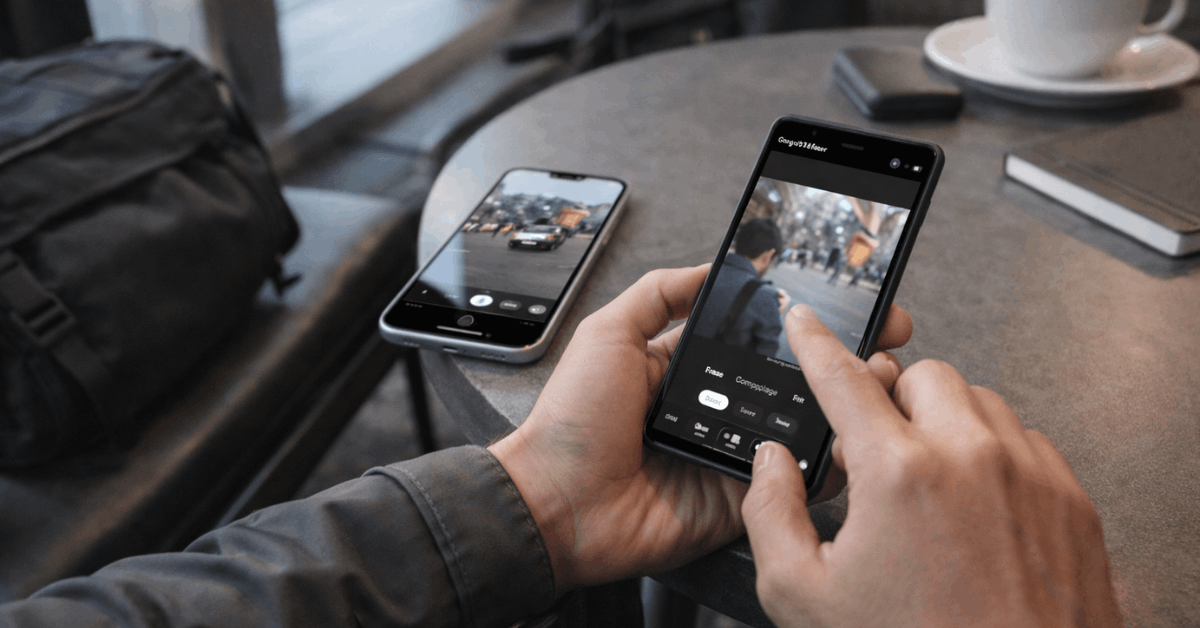
Both phones take great photos, but they approach photography from opposite directions. The iPhone 15 trusts the hardware. The Pixel 8 trusts the software.
iPhone 15 Camera: 48MP Sensor and Video Strength
Apple’s 48-megapixel main sensor defaults to 24-megapixel output, which balances detail and file size well. A built-in 2x lossless crop acts like a basic telephoto without needing a separate lens, which keeps the phone slim while adding reach.
Video is where the iPhone 15 pulls ahead decisively. Dolby Vision HDR recording and stable image stabilization produce footage that content creators and social media users can post without editing.
The color science stays consistent across lighting conditions, so clips shot at different times of day cut together without looking mismatched.
Pixel 8 Camera: Post-Capture Editing Tools
Google’s approach leans into what happens after you press the shutter button. The Pixel 8 camera features a set of tools that no other phone at this price matches:
- Best Take swaps faces between group photos so everyone looks good in one shot
- Magic Eraser removes unwanted people or objects from backgrounds
- Audio Magic Eraser cleans up wind noise and background chatter in videos
- Macro Focus uses the ultrawide lens with autofocus for extreme close-up detail shots
Night photography and mixed lighting remain a Pixel strength. Google’s Real Tone processing produces realistic skin tones across different complexions, and shadow detail in low light stays clean without turning into a grainy mess.
For anyone who edits photos on the phone itself, the Pixel 8 saves time and retakes. The iPhone 15 delivers better footage straight out of the camera with no post-processing required.
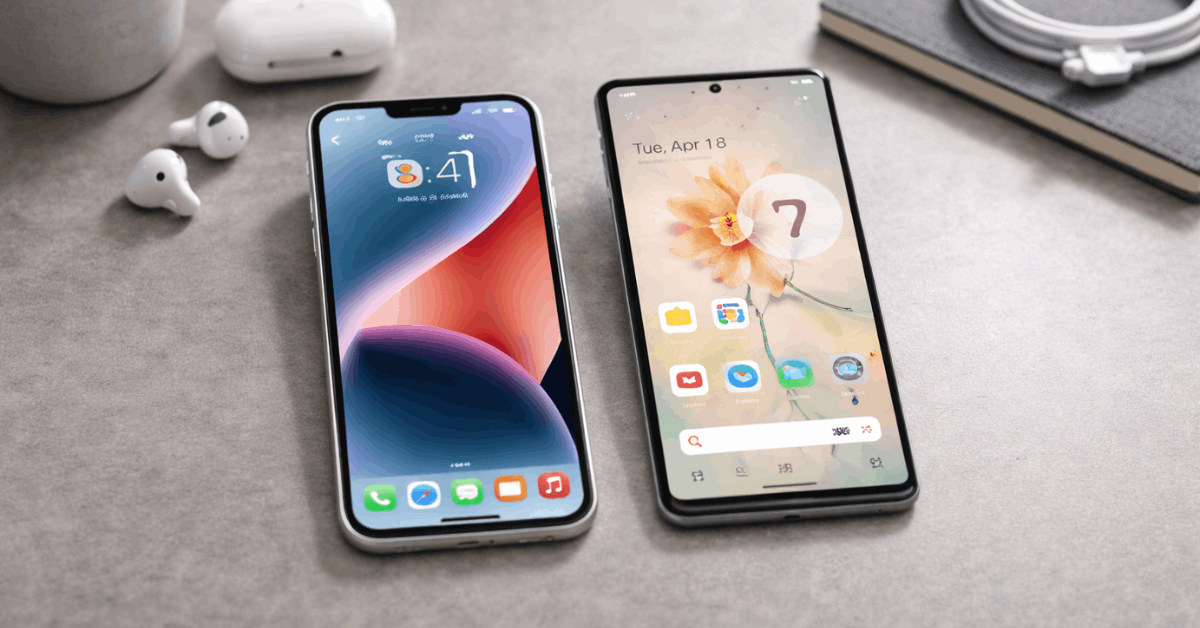
Performance, Storage, and AI Features
Processing power splits along predictable lines, but the differences show up in different daily tasks.
Apple’s A16 Bionic chip in the iPhone 15 handles gaming, app launches, and multitasking without breaking a sweat. Thermal management stays consistent during longer gaming sessions, which matters if you play anything demanding for more than 20 minutes.
Tensor G3 and On-Device AI on Pixel 8
Google’s Tensor G3 chip takes a different approach. Raw benchmark scores run lower than the A16 Bionic, but the chip is built around on-device AI processing.
Live captions, real-time translation, voice dictation accuracy, and all those camera editing tools run locally on the Tensor chip without sending data to the cloud.
If voice commands, live translation, or accessibility features are part of your daily routine, the Pixel 8’s AI processing feels noticeably faster than the iPhone 15 in those specific tasks.
Storage Options
Storage tiers differ enough to affect buying decisions:
- iPhone 15: 128GB, 256GB, and 512GB options
- Pixel 8: 128GB and 256GB options
The iPhone’s 512GB tier suits anyone who shoots lots of 4K HDR video and wants local storage. The Pixel 8 tops out at 256GB, which works fine for photo-heavy users who rely on Google Photos cloud backup.
Battery Life and Charging Speed
Both phones deliver all-day battery life under normal use. The differences show up in how they charge and what accessories work best.
iPhone 15 Battery and MagSafe Charging
Apple’s power management and efficient A16 Bionic chip keep the iPhone 15 battery drain predictable across different activities.
Fast charging works with any 20-watt or higher USB-C adapter. MagSafe wireless charging at 15 watts has a wide accessory market, so finding car mounts, stands, and portable chargers with MagSafe compatibility is simple.
Pixel 8 Charging Speeds
The Pixel 8 pairs a larger battery cell with adaptive software that learns your usage patterns and prioritizes foreground apps.
Wired charging hits up to 27 watts, which edges out the iPhone 15 on cable charging speed. Wireless charging runs faster on the official Pixel Stand, though third-party Qi chargers work at standard speeds.
| Feature | iPhone 15 | Pixel 8 |
|---|---|---|
| Display | 6.1″ OLED, 60Hz, 2000-nit peak | 6.2″ OLED, 120Hz |
| Processor | A16 Bionic | Tensor G3 (AI-focused) |
| Main Camera | 48MP, Dolby Vision video | 50MP, Best Take, Magic Eraser |
| Charging | 20W+ wired, 15W MagSafe | 27W wired, faster wireless on Pixel Stand |
| Storage Options | 128 / 256 / 512GB | 128 / 256GB |
| Software Updates | ~5-6 years historically | 7 years confirmed |
The Pixel 8 wins on charging speed and update commitment, while the iPhone 15 wins on storage options and accessory ecosystem breadth.
Software Updates and Long-Term Support
Software longevity has become a deciding factor for budget-conscious buyers, and one phone made a bolder promise than the other.
Pixel 8’s Seven-Year Update Guarantee
Google committed to seven years of Android updates, security patches, and feature drops for the Pixel 8. That means support through 2030. No other Android phone at this price offered that commitment when the Pixel 8 launched, and few have matched it since.
Feature drops add new capabilities every few months, which means the Pixel 8 keeps gaining functionality long after purchase. This is a strong argument for buyers who want to avoid upgrading for four or five years.
iPhone 15 on iOS and Apple Ecosystem
Apple has historically supported iPhones for five to six years with major iOS releases and continued security patches beyond that. The iPhone 15 running Apple’s latest iOS should receive updates through at least 2028-2029 based on past patterns.
Ecosystem continuity matters here too. AirDrop file sharing, Handoff between Mac and iPhone, Apple Watch pairing, and shared iCloud storage create friction when switching away.
A household already using iPads and MacBooks gets more daily convenience from the iPhone 15 than any spec advantage the Pixel 8 offers in isolation.
Questions People Ask About iPhone 15 vs Google Pixel 8
Q: Is iPhone 15 or Pixel 8 better for photography beginners? The Pixel 8 is a better fit because its editing tools fix common mistakes after the shot. Best Take and Magic Eraser save photos that would otherwise get deleted, which builds confidence faster than learning to nail every shot in camera.
Q: Can the Pixel 8 work with Apple Watch or AirPods? Apple Watch does not pair with Android phones at all. AirPods connect to the Pixel 8 over Bluetooth for basic audio, but lose features like automatic switching, spatial audio, and battery status widgets.
Q: Does the iPhone 15 60Hz screen look bad in 2026? It looks fine for daily tasks, texting, and social media. The 60Hz limitation becomes obvious during fast scrolling and gaming side-by-side with a 120Hz phone, but it rarely bothers users who haven’t used 120Hz recently.
Q: Which phone gets better trade-in value in 2026? The iPhone 15 typically returns more through both Apple’s trade-in program and third-party resale platforms. Pixel devices depreciate faster, which makes the upfront savings less meaningful for frequent upgraders.
Q: Should I wait for iPhone 16 or Pixel 9 instead? Both newer models are available now at higher launch prices. The iPhone 15 and Pixel 8 offer strong performance at discounted prices, and their software support windows still have years of life remaining.
Conclusion
The iPhone 15 vs Google Pixel 8 comparison favors different buyers depending on daily habits and ecosystem ties. Pixel 8 rewards photo editors, budget-first shoppers, and anyone who values a 120Hz screen and long update support.
The iPhone 15 suits video creators, Apple ecosystem users, and buyers who care about resale value and outdoor screen brightness. Anchor the decision to whichever friction point bothers you right now, because both phones still perform well heading into 2027.